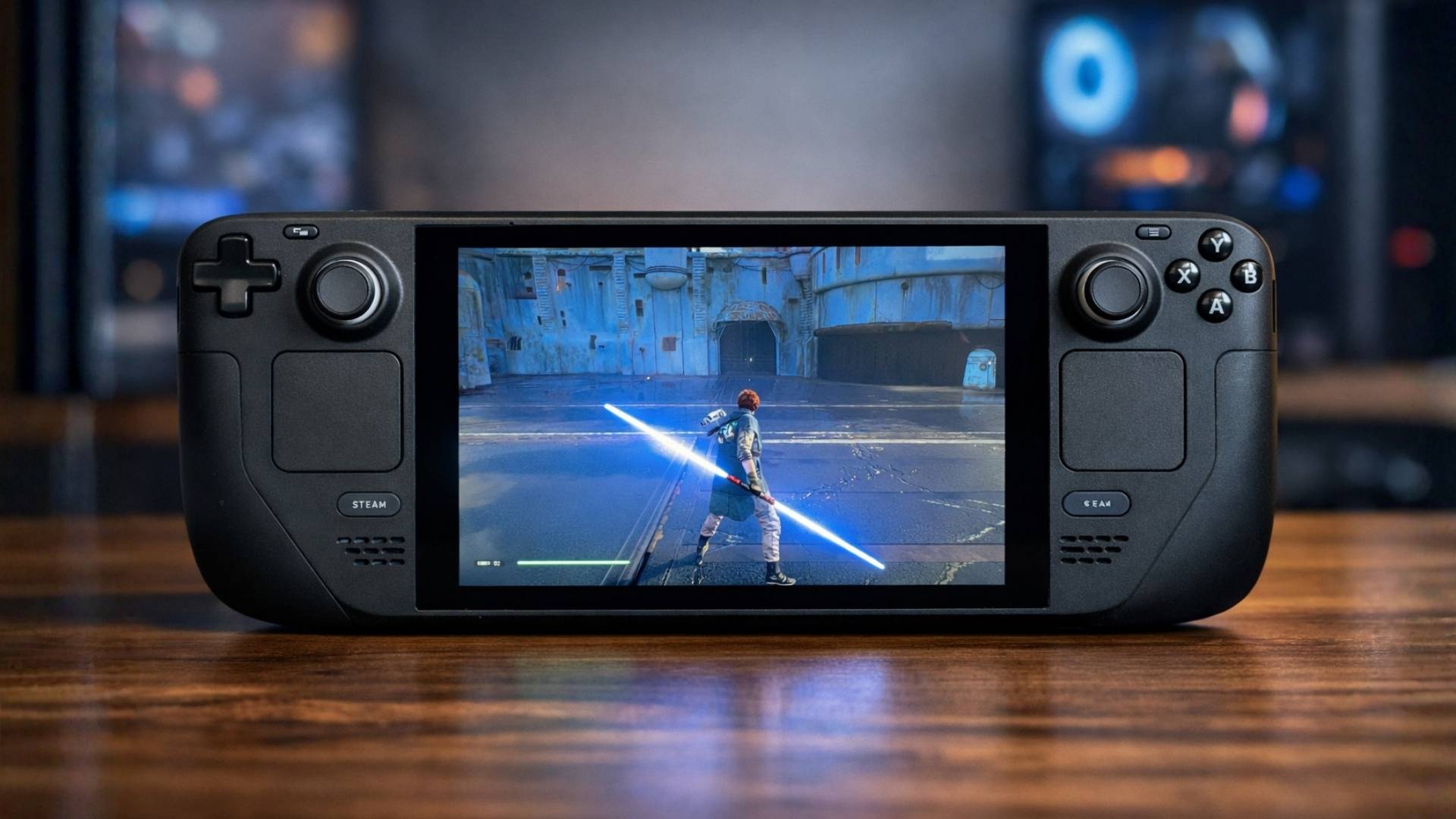
Portable gaming promises freedom, but many handheld devices fail to deliver a smooth and satisfying experience.
Low performance, short battery life, and awkward controls often turn excitement into disappointment.
That’s where the Steam Deck enters this space with a different goal, bringing full PC gaming into a handheld format without forcing players to rebuild their libraries.
This Steam Deck review focuses on how the device performs during everyday use instead of technical benchmarks.
It looks at how games run, how long sessions feel in real conditions, and whether the price makes sense for regular play.
Breaking down practical use cases and everyday expectations provides a clear and honest discussion.
Steam Deck Overview
The Steam Deck is an adaptable handheld gaming device that combines powerful gaming PC capabilities with portability.
It allows gamers to access their game libraries without repurchasing titles, enabling a smooth transition between desktop and handheld gaming.
Running on SteamOS, based on Linux, it also supports Windows for greater compatibility.
With various storage options and high-performance processors and GPUs, it ensures smooth gameplay.
Its ergonomic design features a comprehensive array of buttons, responsive trackpads, and customizable back paddles for an enhanced experience.
The Steam Deck offers a unique gaming experience, drawing comparisons to the Nintendo Switch while maintaining its distinct appeal.
Steam Deck Review: Key Features
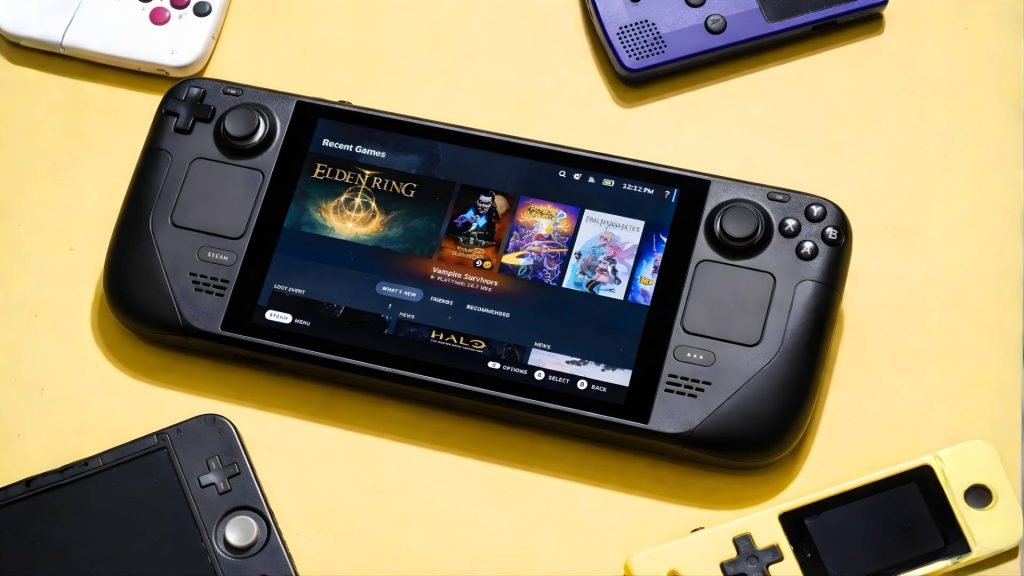
Let’s look at how the Steam Deck performs during everyday gaming, from long play sessions and screen clarity to battery behavior and overall system usability.
1. Design and Build Quality
The Steam Deck feels solid but heavy at 640-669 grams, noticeably more than a Switch or smartphone.
After an hour, your arms will feel it. The button layout takes some getting used to, but dual trackpads are useful for mouse-based games, and back buttons become intuitive over time.
Build quality is good, with firm buttons and responsive joysticks, though some users report minor stick drift.
The fan can get loud during intense gaming, but the OLED model runs slightly quieter.
2. Display Quality
The original LCD screen is functional but lacks vibrancy; colors appear washed out, and blacks look grayish.
In contrast, the OLED screen offers vibrant colors, true blacks, and stunning HDR support.
The upgrade to a 90Hz refresh rate enhances scrolling and motion smoothness.
For LCD users, the OLED upgrade is significant but not essential, while new buyers will find the OLED version worth the extra cost for its superior screen quality.
Both screens have a maximum resolution of 800p, which looks fine on a 7-inch display, keeping text readable and games sharp.
3. Battery Life
Battery life varies by game type; heavygames, such as Cyberpunk and Starfield, last 90 to 120 minutes.
Medium games, like Elden Ring and Monster Hunter, last 2 to 3 hours. Light games, such as Hades and Vampire Survivors, last 4 to 6 hours.
Very light games, including visual novels, can last 6 to 8 hours. The OLED model adds 30-60 minutes of battery life.
To extend battery life, limit the frame rate to 30 fps or reduce thermal design power.
Charging takes about 2 hours, and you can play while charging, though the device may get warm.
4. Software
SteamOS combines console ease with PC benefits. Its clean, controller-friendly interface allows for smooth library browsing, game downloads, and settings adjustments.
For traditional PC functions, desktop mode is available.
You can install non-Steam games, use emulators, and browse the web, though some Windows programs require workarounds due to its Linux base.
Game compatibility has improved; most single-player titles work well, while some multiplayer games with anti-cheat may struggle.
Regular updates enhance performance and fix bugs, showing Valve’s commitment to long-term support.
5. Controls and Comfort
The gaming device features an adaptable control layout with joysticks, a D-pad, face buttons, shoulder buttons, back paddles, trackpads, and a touchscreen, which becomes intuitive with use.
The trackpads excel in strategy games and shooters for precise aiming.
To reduce hand strain during long sessions, it’s advisable to take breaks and consider using grips.
Haptics enhance gameplay feedback, and gyro controls improve aiming accuracy once sensitivity is adjusted.
6. Storage and Expandability
The Steam Deck supports storage upgrades through standard M.2 2230 SSDs, making internal expansion possible without specialized hardware.
It also includes a microSD card slot for quick and affordable storage increases.
A high-quality microSD card works well for most games, though loading times may be slightly slower than internal storage.
Choosing a lower storage option and expanding later can be a practical way to balance cost and capacity while maintaining smooth overall performance.
Steam Deck Performance and Power
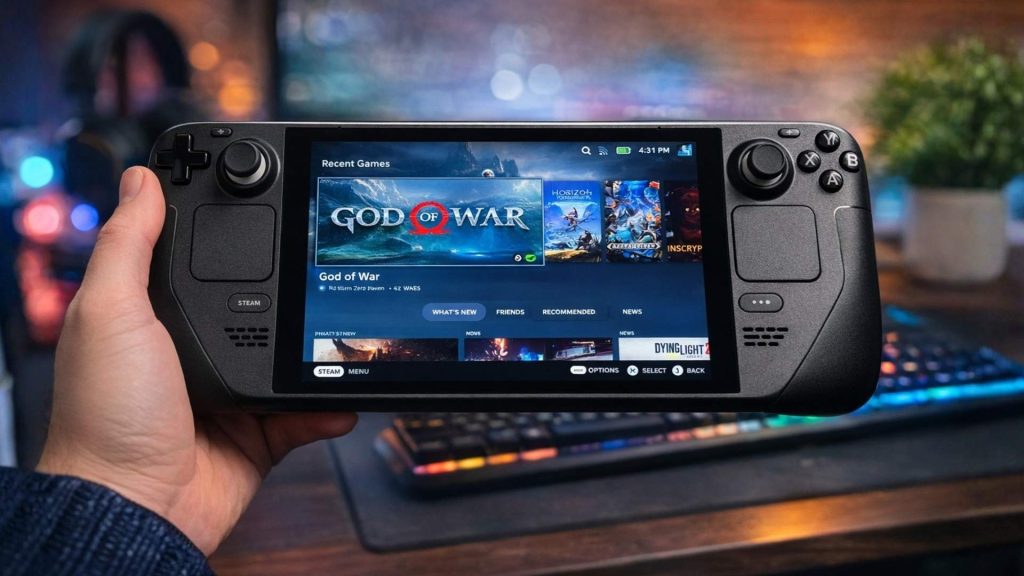
The Deck shows varied results, offering varied performance across a range of games, from AAA titles to indie and older games.
Contemporary AAA games like Cyberpunk 2077 and Elden Ring run at 30 to 40 fps with a battery life of 90 to 120 minutes.
In contrast, less demanding titles like Hades and Stardew Valley achieve around 60 fps and last 5 to 6 hours.
It also handles older AAA games like The Witcher 3 well. Valve’s verification system labels games as Verified, Playable, or Unsupported, with about 85% of verified titles performing effectively.
Overall, the Steam Deck is a solid choice for portable gaming, offering good performance and battery life.
Steam Deck Specs and Hardware
Here’s a detailed overview of the Steam Deck’s core specifications and hardware, highlighting essential components and available configurations for straightforward comparison.
| Feature | Details |
|---|---|
| Processor | AMD Zen 2 with 4 cores and 8 threads |
| Graphics | RDNA 2 GPU with 8 compute units |
| Memory | 16 GB LPDDR5 RAM |
| Storage | 256 GB NVMe, 512 GB NVMe, 1 TB NVMe OLED |
| Display | 7-inch screen with 1280 x 800 resolution |
| Battery | 40 Wh on LCD models, 50 Wh on OLED models |
| Weight | Around 669 g for LCD, 640 g for OLED |
Steam Deck Pricing and Models
The Steam Deck is currently available in OLED variants that differ mainly in storage capacity and screen finish.
The 512GB model is priced at $549 and includes an anti-glare display that performs well in brighter environments.
For users who need more space, the 1TB model costs $649 and comes with additional storage and a premium carrying case.
Performance remains the same across both options, as they share identical processors and graphics hardware.
The choice mainly depends on storage needs and display preference.
Valve also offers periodic discounts during major seasonal sales, often reducing prices by $50 to $75, which can make either model a better value depending on timing.
Steam Deck Review: Real User Feedback

Reddit users share their take in this Steam Deck review community snapshot.
Many users now consider the Steam Deck their primary gaming device, even over high-end PCs.
The handheld format makes games more accessible, leading to increased playtime.
The OLED model is praised for improved battery life and screen quality, addressing complaints about the original version.
Long-term users note that software updates enhance compatibility and performance. Indie games are particularly popular because players enjoy the flexibility to play anywhere.
However, some concerns persist over the device’s weight and battery life, with users often needing additional grips and adjusting their settings to manage expectations.
For those with large Steam libraries, the Steam Deck offers excellent value without the need to repurchase games found on other handheld platforms.
Is the Steam Deck Worth It?
The Steam Deck works best for players who want access to PC games in a portable format without changing how they already play.
It is not meant to replace a full gaming PC, but it fits well alongside one. Many users rely on it for relaxed gaming at home, on the road, or when a desktop is unavailable.
It performs especially well with indie titles and shorter gaming sessions.
However, players focused on competitive multiplayer games or maximum graphics settings may find the experience limiting.
Those new to PC gaming may also need time to build a suitable game library.
Overall, its value depends on how much portability matters and how flexible expectations are around performance and game compatibility.
Conclusion
The Steam Deck proves that handheld PC gaming can be practical without feeling limiting for most players.
It handles a wide range of games well, offers flexible controls, and benefits from regular software updates that continue to improve the experience.
Battery life and weight still require adjustment, especially for longer sessions, but these factors rarely outweigh its overall usefulness.
For players with an existing Steam library, it offers strong value and convenience in one device.
This Steam Deck review shows that it works best as a companion to a PC rather than a full replacement.
Have thoughts or experiences of your own? Drop a comment below and join the discussion.