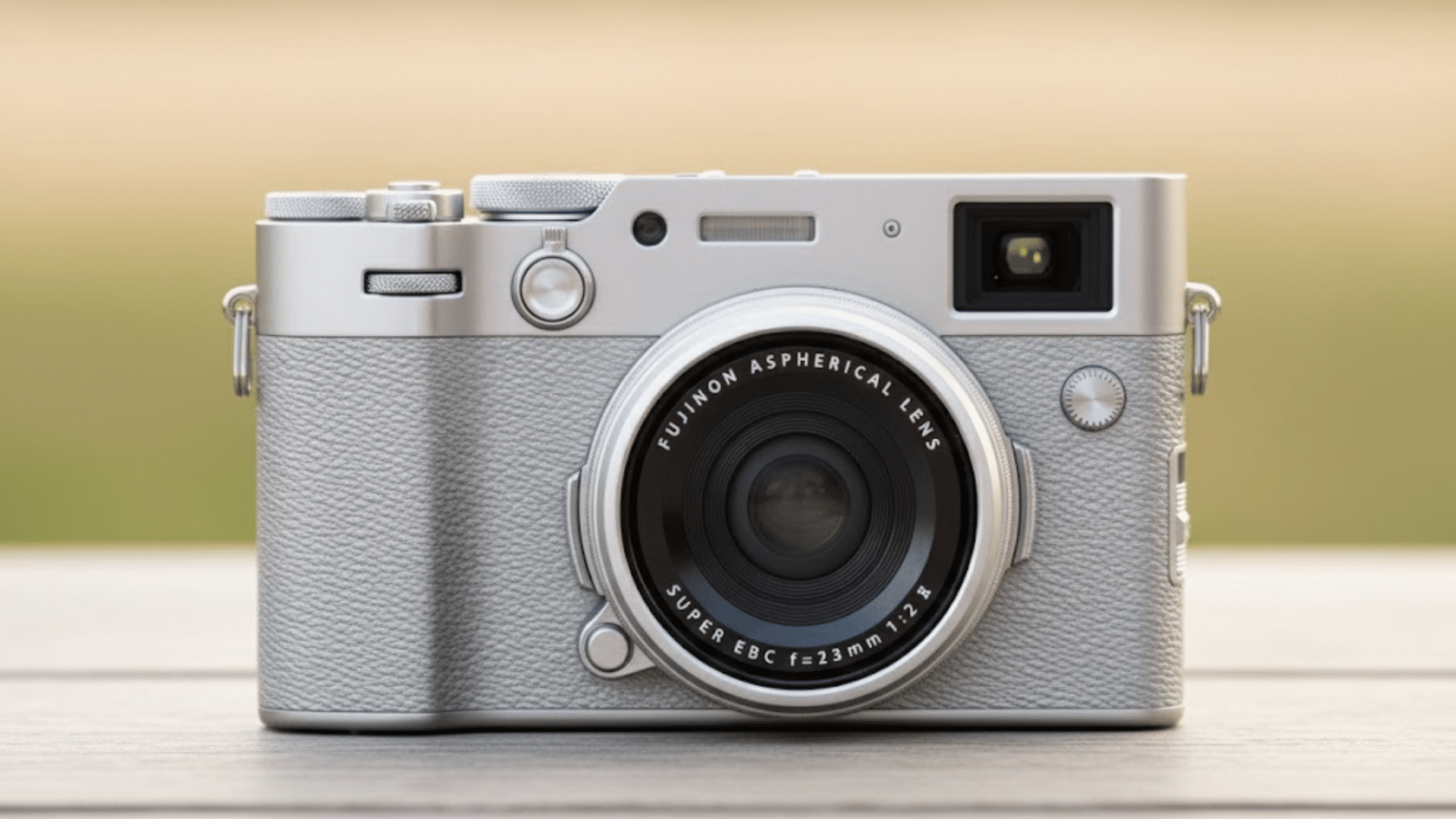
Is a compact camera still a smart choice when modern phones keep improving? While researching Fujifilm’s latest release, that question kept coming up.
In this Fujifilm X100VI review, I break down what the camera offers based on detailed research, specs, and early user feedback rather than hands-on use.
I looked closely at the updated sensor, in-body stabilization, and the familiar fixed-lens design to understand who this camera is really for.
Instead of relying on marketing claims, I focused on what these changes could mean for everyday shooting. As you read, think about your own shooting style and what you expect from a small camera.
This introduction sets the stage for a clear, practical breakdown without hype, focusing on value, features, and real-world expectations only for readers seeking clarity before buying.
What Makes the X100VI Special?
What makes the X100VI special goes beyond a simple spec update. The camera blends a classic fixed-lens design with meaningful internal upgrades aimed at modern shooters.
Its new sensor brings higher resolution while keeping Fujifilm’s well-known color science intact.
In-body image stabilization, a first for the X100 line, changes how handheld shooting works in low light and motion. The compact body stays familiar, yet performance takes a clear step forward.
Fast autofocus improvements help with street, travel, and daily photography without adding complexity. In this Fujifilm X100VI review, the focus stays on why these changes matter in real use, not just on paper.
The X100VI stands out by offering advanced features in a small, simple camera that favors intent and control over excess options for photographers seeking balance and long-term reliability today worldwide.
Fujifilm X100VI Review: Key Features
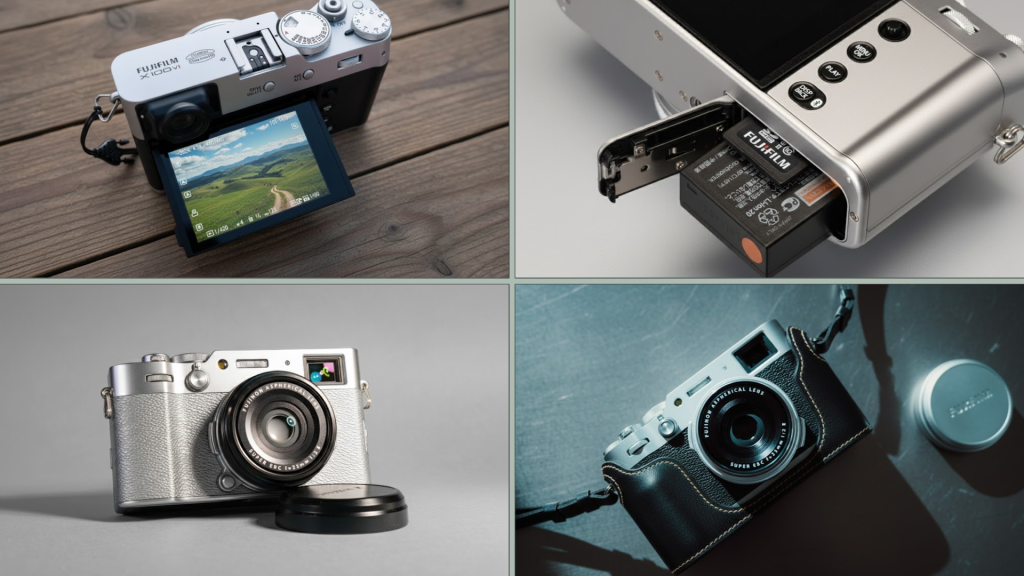
What follows is a focused breakdown of how the Fujifilm X100VI performs across design, handling, performance, and everyday usability.
1. Design and Build Quality
Build quality plays a major role in how a compact camera feels over the years of use. The body uses solid metal construction that gives weight without feeling heavy during daily carry.
Dials and buttons appear firm, with resistance tuned for confident adjustments rather than quick accidental changes.
Weather resistance adds reliability for outdoor shooting, especially for travel and street photography. The design keeps the classic rangefinder look, which appeals to users who prefer a discreet appearance.
Grip depth remains minimal, but balance stays comfortable with one-handed use.
2. Image Quality Performance
Image quality remains a defining strength, supported by a higher resolution sensor and refined processing. The sensor delivers sharp detail while keeping noise controlled across a wide ISO range.
Color reproduction stays natural, with Fujifilm’s film simulations offering pleasing tonal balance straight out of the camera.
Dynamic range improvements help retain highlight and shadow detail in challenging lighting conditions.
JPEG output appears well-tuned for everyday use, while RAW files provide flexibility for editing. The fixed lens pairs effectively with the sensor, producing consistent sharpness across the frame.
3. Autofocus System and Speed
Autofocus performance sees notable improvements aimed at accuracy and reliability. The system uses advanced phase detection coverage to track subjects more effectively across the frame.
Face and eye detection perform consistently for portraits and casual people photography. Subject tracking benefits moving subjects, helping maintain focus during short bursts.
Speed feels responsive for everyday shooting, reducing missed moments in fast-paced environments.
Low-light focusing also shows better stability compared to earlier generations. While not designed for sports-heavy use, the system handles street, lifestyle, and travel scenarios with confidence.
4. Ergonomics & User Experience
Ergonomics focuses on simplicity and familiarity rather than reinvention. Physical dials provide direct control over exposure settings, reducing dependence on menus.
The hybrid viewfinder offers flexibility, allowing quick switching between optical and electronic modes.
Button placement favors muscle memory, especially for users familiar with previous X100 models. Menu navigation stays clean, with logical grouping that avoids clutter.
Touchscreen support adds convenience for focus selection without overwhelming traditional controls. The compact size encourages daily carry, though extended shooting may benefit from optional accessories.
5. Focal Length
The fixed focal length plays a central role in shaping how the camera is used. It encourages thoughtful composition and consistent framing rather than constant lens changes.
The perspective suits street, travel, environmental portraits, and everyday scenes with minimal distortion. Depth of field control remains effective for subject separation without becoming overly shallow.
Optical performance stays sharp across apertures, maintaining clarity from center to edges.
Close focusing capability adds flexibility for detail shots and casual macro-style images. The lens design complements the sensor, delivering balanced results without relying on digital corrections.
6. Battery Life and Connectivity
Battery performance supports moderate daily shooting without constant recharging. Efficiency improvements help extend use during casual photography sessions.
USB-C charging adds convenience, allowing power banks and standard cables to be used while traveling.
Wireless connectivity enables quick image transfer to mobile devices for sharing and backup. Bluetooth maintains a steady connection without excessive battery drain.
App integration supports remote shooting and basic camera control when needed. While not designed for extended video recording sessions, the battery handles mixed photo use reliably.
Fujifilm X100VI Review: Price Point Analysis

The Fujifilm X100VI stands out as a premium compact camera with a mix of retro design and modern performance.
It uses a 40.2MP APS-C X-Trans CMOS 5 HR sensor and X-Processor 5 for strong image quality and 6.2K video.
The fixed 23mm f/2 Fujinon lens equals a 35mm full-frame view and delivers sharp, rich results. This setup works well for street, travel, and documentary photography.
Six-stop in-body stabilization and a hybrid optical-electronic viewfinder add practical value. Retail pricing sits around $1,599–$1,799 USD, though demand often pushes prices higher.
The cost feels justified thanks to solid build quality, film simulations, and intuitive controls. Weather sealing needs optional accessories, and battery life fits most full-day shooting needs.
Fujifilm X100VI Review: Pros and Cons
Below is a quick overview highlighting the main strengths and drawbacks to help decide if the Fujifilm X100VI fits your shooting needs.
| Pros | Cons |
|---|---|
| Excellent image quality | Fixed lens limits flexibility |
| Compact and lightweight body | High demand affects availability |
| In-body image stabilization | Battery life is average |
| Hybrid optical-electronic viewfinder | No weather sealing by default |
| Strong film simulations | The price is higher than previous models |
| Fast and reliable autofocus | Not ideal for sports photography |
| Solid metal build | Limited grip without accessories |
| Great for street photography | Video tools are not cinema-focused |
Who Should Choose Fujifilm X100VI?
The Fujifilm X100VI suits photographers who value simplicity, image quality, and a compact form. It appeals to street and travel shooters who prefer a fixed focal length and a discreet camera.
The design favors those who enjoy manual controls and a slower, more intentional shooting style.
Content creators who focus on photography over heavy video production will find its features well-balanced.
Enthusiasts upgrading from older compact cameras may appreciate the improved sensor and stabilization. It also fits users seeking a high-quality everyday camera without interchangeable lenses.
In this Fujifilm X100VI review, the camera stands out for people who prioritize color science, portability, and reliable performance.
Buyers should be comfortable with limited Zoom options and occasional availability challenges.
Overall, it fits photographers who want a premium tool that encourages creativity without complexity or excess features.
Conclusion
I see the Fujifilm X100VI as a camera built for focus, not excess. After researching its features, design, and user feedback, it feels aimed at photographers who value intent over convenience.
This Fujifilm X100VI review shows a balance between classic controls and modern performance without chasing trends.
It encourages slower shooting, stronger framing, and commitment to a single lens. That approach will not suit everyone, yet it rewards patience and consistency.
Portability, image quality, and thoughtful handling stand out as its core strengths. Before deciding, I suggest thinking about how you actually shoot each day.
Would fewer choices help creativity or feel limiting? If you enjoy simple tools with depth, this camera deserves attention.
Share your thoughts below and join the conversation in the comments section today, and stay engaged!