Which streaming platform actually fits the way I watch TV?
When I compare options, I notice that the choice affects daily habits more than I expected.
Usually, I use my TV for quick shows, weekend movies, and background news, so the system needs to feel easy without locking me into one style.
In this Roku TV vs Google TV discussion, I focus on how each platform handles apps, search, recommendations, and speed.
I pay attention to setup time, remote controls, and how simple it feels for everyone in the house.
Some platforms favor clean menus, while others push smart suggestions. Neither approach is wrong, but the experience can feel different.
By thinking through my viewing routine and small preferences, I can decide which platform makes streaming smoother and more practical over time.
What are Roku TV and Google TV?
Roku TV is a smart TV platform known for its simple layout and broad app support. It offers fast access to streaming services, live TV options, and an easy-to-use remote.
The system focuses on straightforward navigation, making it popular with users who want fewer menus and settings.
Google TV, built on Android TV, centers on content discovery and personalization.
It organizes shows and movies across apps, uses Google search features, and supports voice control through Google Assistant.
Smart home tools and profile-based recommendations add flexibility. When comparing Roku TV vs Google TV, the difference comes down to simplicity versus customization.
Roku TV vs Google TV: Key Differences at a Glance
This section highlights the main contrasts in design, features, and usability to help readers quickly understand how Roku TV vs Google TV differ in everyday streaming experiences.
1. User Interface and Layout
Roku TV uses a straightforward, app-first layout designed for speed and clarity. The home screen displays installed apps in a grid, with minimal distractions and limited visual clutter.
Menus respond quickly, and navigation remains consistent across devices and brands. Google TV focuses more on content presentation than apps.
The home screen features rows of recommended movies, shows, and live content pulled from multiple services. This design encourages discovery but adds more on-screen elements.
2. Content Discovery and Recommendations
Roku TV keeps recommendations subtle, mainly highlighting trending titles or promoted channels without dominating the interface.
Users usually open individual apps to browse content. Google TV actively curates recommendations using viewing history, subscriptions, and Google account data.
Roku TV offers more manual control, while Google TV emphasizes automation and personalization for users who want content surfaced automatically.
3. Voice Control and Smart Features
Voice control on Roku TV is available through select remotes and mobile apps, allowing basic searches and commands. It works well for finding titles but remains limited in scope.
Google TV integrates deeply with Google Assistant, enabling advanced voice searches, smart home controls, and personalized responses.
Users can ask about the weather, control connected devices, or search across apps using natural language.
4. Ecosystem and Device Integration
Roku TV operates as a neutral platform, working equally well with various streaming services and TV brands. It does not require a specific account ecosystem to function fully.
Google TV integrates tightly with Google services such as YouTube, Google Photos, and Google Home. Profiles sync across devices, creating a connected experience.
The difference influences long-term use, especially for households managing multiple devices, accounts, and connected smart home tools.
Remote Control Features: Roku TV vs Google TV
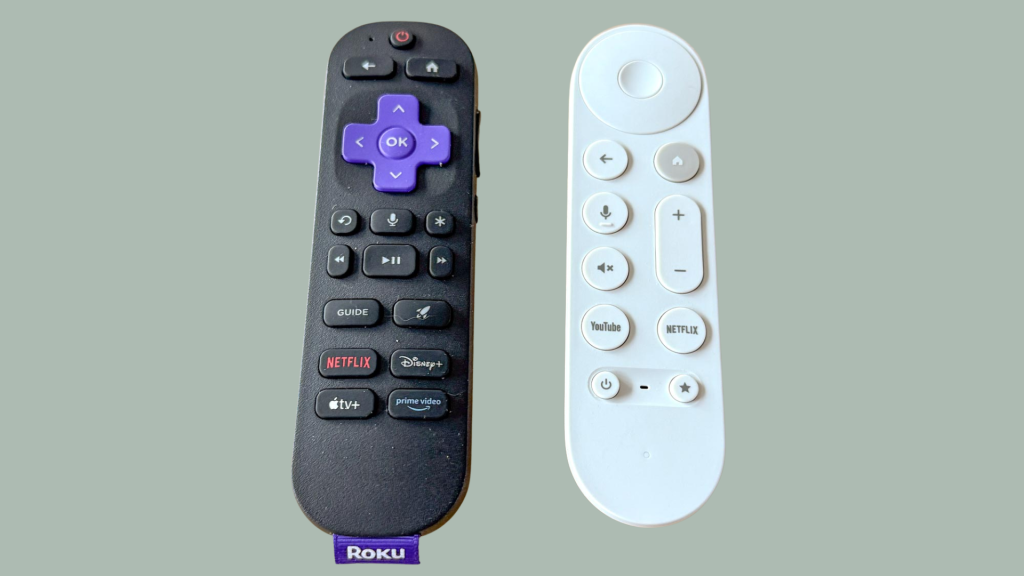
Compare Roku TV and Google TV remote features, highlighting key functions to help you choose your preferred system.
- Voice Control: Both Roku TV and Google TV support voice commands, allowing hands-free control for browsing, searching, and volume adjustments.
- Dedicated App Buttons: Roku TV features quick access to streaming services, while Google TV has customizable buttons for popular apps like Netflix and YouTube.
- Screen Mirroring: Google TV offers native casting support for Android devices, and Roku TV allows screen mirroring from both Android and Windows devices.
- Personalized Recommendations: Google TV’s remote provides personalized content suggestions based on your viewing habits, helping you discover new shows and movies.
- Google Assistant Integration: With Google TV, users can control smart devices, check the weather, or ask questions directly through voice commands, while Roku has limited assistant functionality.
Price and Value Comparison: Roku TV vs Google TV
Roku focuses on clean navigation, simple menus, and wide access to streaming channels, with libraries exceeding 10,000 options.
Pricing stays budget-friendly, often ranging from about $150 to $400 for 32–43-inch 4K models from brands like TCL or Hisense.
This makes Roku a strong choice for casual streamers who want ease of use without an interface crowded by ads.
Google TVs, built on Android TV, lean into AI-based personalization and deeper Google ecosystem support.
Features such as Chromecast built-in and advanced Google Assistant voice search stand out.
Entry-level models usually start around $200–$500, while 50–65 inch options from Sony or TCL can reach $1,000 or more.
Roku delivers better upfront value at roughly $300–$450 per capable unit. Google TV, while pricier, offers stronger long-term utility, making the decision depend on cost savings versus feature depth.
Privacy and Data Collection Policies: Roku TV vs Google TV
Comparison of how Roku TV and Google TV handle user privacy and data collection, including tracking, personalization, opt‑out choices, and transparency controls.
- Data Collection Scope: Roku TV gathers viewing habits, device info, and app use to personalize ads and improve services, with options to limit interest‑based ads in settings.
- Google Data Use: Google TV links viewing and interaction data to your Google account for recommendations and ad targeting, with privacy controls in your Google account dashboard.
- Third‑Party Sharing: Roku shares some data with advertising partners to serve relevant ads and measure performance while offering limited partner disclosure.
- Personalization Controls: Google TV lets you adjust activity tracking and ad personalization, controlling what data influences recommendations and targeted advertising.
- Transparency & Reporting: Roku provides a privacy policy outlining types of collected data and opt‑out choices, though details on specific uses may be less granular than Google’s.
Roku TV vs Google TV: Comparison Table
This table highlights key differences between Roku TV and Google TV, offering a quick, clear comparison of features that matter most for everyday streaming decisions.
| Feature | Roku TV | Google TV |
|---|---|---|
| User Interface | Simple, app-focused grid | Content-first, recommendation-heavy |
| Ease of Use | Very easy for beginners | Slight learning curve |
| App Availability | 10,000+ streaming channels | Wide apps via the Play Store |
| Voice Control | Basic voice search | Advanced Google Assistant |
| Smart Home Support | Limited integrations | Strong Google Home support |
| Pricing Range | Budget-friendly options | Mid to premium pricing |
Which Streaming Platform Should You Choose?
Choosing the right streaming platform depends on viewing habits, budget, and feature preferences. Roku TV suits users who value simplicity, fast navigation, and affordable pricing.
Its clean interface makes streaming easy for households that prefer direct access to apps without heavy personalization.
Google TV is better suited for users who enjoy content recommendations, voice control, and integration with Google services.
Roku TV focuses on straightforward streaming, while Google TV emphasizes discovery and ecosystem features. The decision comes down to priorities.
Those seeking ease and lower cost may prefer Roku TV. Viewers wanting advanced features, smart tools, and personalized content management may find Google TV a better long-term choice.
Conclusion
I see the decision as a balance between comfort and capability. When I think about daily use, clarity, speed, and cost matter as much as smart features.
The roku tv vs google tv comparison shows two solid paths, not a right or wrong answer. Roku fits viewers who want quick access, simple menus, and predictable behavior.
Google TV fits those who enjoy recommendations, voice tools, and connected services. Both stream well, update often, and support major apps.
The better pick depends on habits, rooms, and who uses the remote most. I recommend listing priorities, setting a budget, and choosing the platform that reduces friction over time.
Ready to decide? Share which platform fits your home and why in the comments below.
Your feedback helps others choose with confidence today together