Moondrop Space Travel is often what comes to mind when you are hunting for earbuds that sound good without burning your wallet.
At around $25, these true wireless earbuds pack active noise cancellation, Bluetooth 5.3, and a sound tuning profile that competes with options costing significantly more.
This review covers the design, sound, features, battery life, and honest limitations so you can decide if they are the right fit before buying.
In this blog, you will learn what these earbuds are really like. We will look at the design, sound, features, battery performance, and connection quality.
You will also see who they are best for and where you can buy them safely. By the end, you should have a clear idea if this is the right pick for your needs and budget.
Moondrop Space Travel: Quick Specs at a Glance
| Specification | Detail |
|---|---|
| Driver | 13mm Titanium Dome Composite Diaphragm |
| Bluetooth | 5.3 |
| Codecs | SBC, AAC |
| ANC | Up to 35dB noise isolation |
| Game Mode Latency | 55ms |
| Battery (Buds) | Up to 4 hours |
| Battery (Total with Case) | Up to 12 hours |
| Frequency Response | 20Hz to 20kHz |
| Sensitivity | ~119 dB |
| Impedance | ~28 ohms |
| IP Rating | None |
| Price | ~$25 |
What are Moondrop Space Travel Earbuds?
Moondrop is a brand known among audio fans for focusing more on sound tuning than flashy marketing.
It started with wired earphones and built a strong name by offering clean and balanced audio at fair prices. Over time, the brand moved into wireless products, keeping the same sound-focused approach.
The brand tunes its earbuds to the VDSF (Virtual Diffuse Sound Field) target response curve, a standard that prioritizes natural, balanced audio reproduction across the full frequency range.
This level of tuning discipline is rare among earbuds priced under $30, where most competing brands default to boosted bass to impress casual listeners.
The Moondrop Space Travel earbuds are positioned as an affordable true wireless option for people who care about sound but still want modern features.
They are aimed at casual listeners, students, and anyone who wants good audio for daily use without spending too much. If you are still comparing your options, our guide on the best AirPods alternatives covers more budget-friendly picks worth considering.
Their key selling points include a balanced Harman-adjacent sound profile, active noise cancellation of up to 35dB, three bass tuning presets through the Moondrop Link app, a 55ms low-latency game mode, and a compact case that fits easily in a pocket.
Their key selling points include a balanced sound profile, active noise control, app support, and a compact case.
Moondrop Space Travel: Design and Build Quality

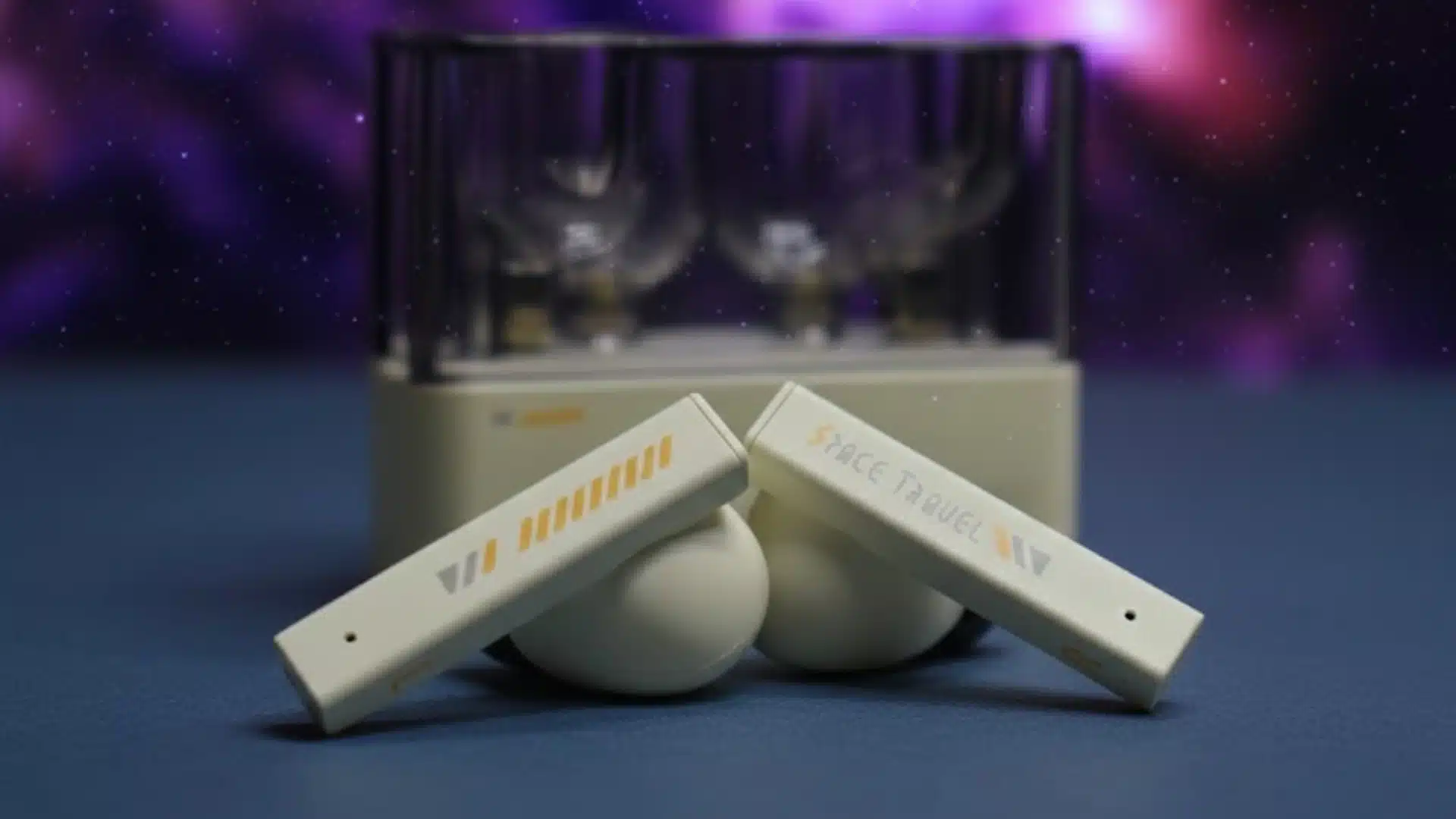
The Moondrop Space Travel earbuds feature a clean and minimal design that keeps things simple without looking boring.
The earbuds are made of plastic, yet the build feels solid enough for daily use, and the smooth finish helps avoid visible scratches and marks.
The charging case follows the same design language and feels light while still being sturdy.
However, the case uses an open, lidless design with no cover to protect the earbuds from dust or accidental falls.
This is one of the most common complaints across user reviews, and it is worth knowing before purchase.
The charging port is also located on the bottom of the case, which means the case must be placed on its side while plugged in
In terms of comfort, the earbuds sit naturally in the ears and remain comfortable even during longer listening sessions.
They do not press too hard and stay in place during regular movement like walking or commuting.
One important limitation: the Moondrop Space Travel carries no IP rating for dust or water resistance.
This means there is no tested protection against sweat or rain. Using them during workouts or in wet conditions is not advisable.
Portability is well handled since the case is compact and easy to carry in a pocket or small pouch.
Moondrop Space: Travel Sound Performance

The sound tuning focuses on balance and clarity, aiming to deliver a clean listening experience that works well across music, videos, and everyday audio use.
1. Bass response
The bass response is controlled and well judged, avoiding the heavy thump that many budget earbuds push. It delivers enough depth to give songs body, but it does not bleed into other frequencies.
Bass notes feel tight and textured rather than loose or overpowering. This makes it suitable for pop, acoustic tracks, and even light electronic music.
Through the Moondrop Link app, you can also select one of three bass tuning presets: Monitor, Reference, and Basshead.
The Monitor preset keeps things the flattest, Reference is the default balanced setting, and Basshead adds a noticeable low-end lift for those who want more punch.
The difference between presets is subtle but gives useful flexibility without needing a full EQ.
Listeners who prefer clarity over punch will appreciate how the low end supports the sound instead of dominating it.
2. Mids and Vocals
The midrange is where the tuning really shines. Vocals sound natural and clear, staying forward without feeling sharp or forced.
Instruments like guitars and keyboards maintain good separation, which helps tracks feel open and easy to follow.
Dialogue in podcasts and videos also benefits from this tuning, as voices remain clean and consistent. The mids do not feel recessed, making the overall sound engaging without being tiring during longer sessions.
3. Treble Quality
Treble performance is smooth and relaxed, which helps reduce harshness during extended listening. High notes come through with enough detail to add clarity, but they avoid sharp peaks that can cause discomfort.
This makes cymbals and higher instruments sound controlled rather than splashy. The treble does not try to impress with brightness, instead focusing on comfort and balance.
This approach works well for users who listen for long hours and prefer a softer top end.
Moondrop Space Travel: ANC and Transparency Mode
The Moondrop Space Travel includes active noise cancellation using a feedforward design, which Moondrop states reduces ambient noise without negatively affecting bass response.
At this price point, functional ANC is rare, and the Space Travel delivers it in a meaningful way.
The ANC reduces mid-level sounds like keyboard clicks, office chatter, and background music noticeably.
Louder environmental sounds like rain or strong wind are softened but not fully eliminated, which is expected performance at this price tier.
Transparency mode lets you hear your surroundings without removing the earbuds, which is useful for commuting or crossing busy streets.
It works well enough for awareness, though following a full conversation in transparency mode at higher volumes can be difficult.
Switching between modes is done by holding either earbud.
The Space Travel uses a set of distinctive voice prompts to confirm each mode change: a “Hey!” for transparency mode, a hushing sound for ANC on, and a questioning sound for ANC off.
These prompts have a personality to them, but they are not the standard spoken announcements you get on most other earbuds. New users may need a few days to learn what each sound means.
Moondrop Space Travel: Battery Life and Charging
The earbuds deliver up to 4 hours of playback per charge. With the charging case providing additional reserves, total battery time reaches up to 12 hours.
For daily commuting and regular listening sessions, this is adequate but falls short for extended travel or long workday use. The charging speed is average for this price point.
The case uses a USB-A to USB-C cable, which is functional but may feel outdated if your other devices have moved fully to USB-C on both ends.
The charging port location on the underside of the case means you cannot charge the case upright, which adds a small but regular inconvenience. Wireless charging is not supported.
Moondrop Space Travel: Controls, App, and Game Mode
The Moondrop Link app allows you to customize gestures, switch between the three bass presets, and access firmware updates.
The app is available for both Android and iOS, though some users have reported difficulty locating it on certain Android app stores.
Downloading directly from the Moondrop website is a reliable alternative if the app does not appear in your store search.
For gaming or video playback, the Space Travel includes a dedicated game mode activated by tapping either earbud four times.
This drops latency to 55ms, which is the official chipset specification, and reduces noticeable audio lag in games and video apps. It is a useful addition that not many earbuds at this price offer.
Moondrop Space Travel: Call Quality
Call quality is acceptable in quiet environments.
Your voice comes through clearly enough for standard calls at home, in a calm office, or while walking in still conditions.
In wind or noisy outdoor settings, the microphone picks up significant background interference, which is common across most budget wireless earbuds.
If frequent outdoor calls in varied conditions are a priority, this is worth factoring into your decision.
The Tech Behind Moondrop Space Travel Earbuds

These earbuds use a dynamic driver setup that focuses on natural sound output.
The driver is a 13mm enhanced unit with a Titanium Dome Composite Diaphragm, which helps deliver better treble extension and detail control while keeping distortion low across the frequency range.
Connectivity runs on Bluetooth 5.3, which provides stable pairing and reliable range for everyday use.
Supported codecs are SBC and AAC. LDAC and aptX are not available on this model, which is a reasonable trade-off at this price but worth noting for listeners who want higher-quality wireless audio transmission.
The earbuds have an impedance of around 28 ohms, making them easy to drive by phones, tablets, and laptops.
Sensitivity sits close to 119 dB, which means they can get loud without needing high volume levels.
Some users find the default maximum volume slightly softer than competing earbuds, so running them at 70 to 80 percent volume is normal and expected.
The frequency response range is listed as 20Hz to 20kHz, covering the full range of human hearing and allowing the earbuds to handle deep lows and clear highs without strain.
Moondrop Space Travel: User Feedback and Impressions

User feedback around Moondrop Space Travel highlights why these earbuds stand out in the budget segment.
Many listeners appreciate the neutral Harman style tuning, which is rare at this price point and feels more balanced than most bass-heavy options.
This tuning makes music sound clean and natural, especially vocals and instruments. Some users describe the overall performance as average on paper, but the lower price changes that view completely.
When cost is taken into account, the value feels stronger and fits the needs of a wide range of users.
Several buyers also compare Moondrop Space Travel with much more expensive earbuds and feel the difference is smaller than expected.
In some cases, sound quality and features come surprisingly close to products costing far more. For budget-focused buyers who still care about tuning and features, these earbuds leave a strong impression.
Moondrop Space Travel: Pros and Cons at a Glance
This quick overview makes it clear that the Moondrop Space Travel delivers strong audio value for the price, while a few design and convenience trade-offs may matter depending on daily use.
| Pros | Cons |
|---|---|
| Balanced VDSF-tuned sound that outperforms most budget options | No IP rating, not ideal for workouts or moisture exposure |
| Functional ANC up to 35dB at a very low price | A lidless case can collect dust and may not secure the earbuds well |
| Three bass presets available through the Moondrop Link app | Around 4 hours of battery life per charge is below average |
| 55ms game mode for smoother video and gaming sync | No LDAC or aptX support |
| Comfortable, shallow fit with multiple ear tip options | Charging port design prevents upright charging |
| Bluetooth 5.3 ensures stable connectivity | Touch controls can be inconsistent if not tapped precisely |
Moondrop Space Travel Price and Value for Money
The price of Moondrop Space Travel earbuds typically ranges from $21 to $30, making them a budget-friendly choice in the true wireless segment.
At this price range, they offer a good mix of sound quality, comfort, and features that you do not always get with other entry-level options.
This makes them a solid pick if you are looking for everyday wireless earbuds that sound better than generic no-name brands.
They also suit listeners who care about music, podcasts, and calls without needing premium-level features or ultra-heavy bass.
If you want value and sensible performance without a high price tag, these earbuds make sense.
Where to Buy Moondrop Space Travel Earbuds
Knowing where to buy helps avoid fake products and pricing issues, while also making sure you get proper warranty support and genuine accessories.
- Official retailers: Buying from brand-approved sellers ensures original products, valid warranty coverage, and proper after-sales support if issues come up later.
- Online marketplaces: Popular platforms offer easy availability, user reviews, and frequent discounts, but it is important to check seller ratings and return policies.
- Regional availability: Availability can vary by country, so some regions may rely more on import sellers or international shipping options.
- Linsoul Audio: Linsoul is an authorized Moondrop distributor that ships internationally and is a reliable option for buyers outside the US who want verified stock.>
Conclusion
Moondrop Space Travel wraps up as a solid option for anyone looking for affordable wireless earbuds that focus on sound quality and useful features.
Throughout this blog, we looked at the design, comfort, sound performance, technical specs, pricing, and buying options to give a clear picture of what these earbuds offer.
The balanced tuning, comfortable fit, and fair feature set make them easy to recommend in the budget range. They are not trying to compete with premium models, but they deliver more than expected for the price.
If you want clean sound, decent noise control, and a compact design without spending too much, these earbuds make sense.
They suit daily listening, calls, and casual music sessions without feeling like a compromise. Does this sound like the kind of earbuds you would use every day?
Drop your thoughts or questions in the comments and let us know what you think.