Walking into a school, office, or hotel, most people barely notice the small devices mounted on ceilings or walls, mistaking them for smoke detectors.
I started paying attention when these spaces began adding quiet tools meant to protect shared indoor air.
Over time, questions arose about vape detectors, especially what vape detectors look like and why they appear so ordinary.
These devices detect vape aerosol in the air from e-cigarettes, helping enforce no-vaping rules without cameras or sound recording.
I will tell you what vape detectors look like, where they are placed, and why their designs remain simple and low-key.
But before getting into shapes and features, it helps to understand why they differ from smoke detectors and how they work.
What Are Vape Detectors and How Do They Work?
Vape detectors are small electronic devices designed to sense vape aerosol inside indoor areas where vaping rules exist and direct supervision is limited.
Most vape detectors mainly focus on vaping particles, but some advanced models can also detect normal smoke or light burning smoke.
They differ from basic smoke alarms because their main goal is identifying vaping activity rather than fire emergencies.
How they work:
- The device pulls nearby air again and again to check for tiny liquid particles released from e-cigarettes, pods, or disposable vapes during use.
- Built-in laser particle sensors measure particle size and density to tell vape aerosol apart from normal dust or air movement.
- Gas sensors detect chemical changes associated with propylene glycol or vegetable glycerin, which are found in most vape liquids.
- When detected levels exceed a set limit, the system sends a silent alert to staff via apps, email, or text message.
What Do Vape Detectors Look Like?

Most vape detectors are designed to blend into everyday rooms, so people often mistake them for smoke alarms or basic air sensors.
They usually come in small, round, or box shapes, measuring 3 to 6 inches, with smooth plastic shells designed for indoor mounting.
Most units are available in white, gray, or black, helping them match ceilings and walls without drawing attention in shared or monitored spaces.
You may notice small vents, holes, or mesh sections on the front or sides where air enters during normal airflow cycles.
Some models include tiny LED lights that indicate power or status, but they stay dim to avoid drawing attention.
Overall, vape detectors look plain on purpose, focusing on quiet monitoring instead of standing out visually in schools, offices, hotels, and similar locations.
Common Design Types of Vape Detectors
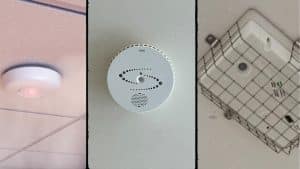
Vape detectors come in a few common designs, each built to fit different rooms, mounting needs, and risk levels without drawing too much attention.
1. Ceiling-Mounted Models
Ceiling-mounted vape detectors are the most common type and usually look similar to standard smoke alarms at first glance.
They are often round, measuring 4 to 6 inches, and sit flush or slightly raised from the ceiling surface.
Small vents or holes allow air to enter from all sides for steady sampling. This placement helps cover larger areas evenly and keeps the device out of easy reach.
Schools, bathrooms, and hallways use this style often because it blends in naturally.
2. Wall-Mounted Models
Wall-mounted vape detectors are usually boxy or rectangular and resemble small speakers or air sensors.
These units are often 4 to 8 inches wide and mount at eye level or higher on walls. Air vents are placed on the front or sides for proper airflow detection.
This design works well in rooms with lower ceilings or where ceiling access is limited. Maintenance stays easier since staff can reach them without ladders.
3. Tamper-Resistant or Caged Variants
Tamper-resistant vape detectors are designed for areas where damage or misuse is more likely.
They look similar to regular ceiling or wall units but include a metal cage or protective cover. The cage allows airflow while stopping hands or objects from touching the device directly.
Schools, locker rooms, and public restrooms use these models often to reduce damage.
The added protection increases durability without changing how the detector works.
Where Are Vape Detectors Commonly Installed?
Vape detectors are usually placed in locations where vaping happens quietly, and supervision stays limited, making normal monitoring methods less effective.
- School bathrooms and restrooms: Installed here because students often vape in private stalls where cameras are not allowed, and adult presence stays limited.
- Locker rooms and changing areas: Used because enclosed spaces with short visits make it harder to detect vaping without air-monitoring devices.
- Hallways and stairwells: Placed to catch vaping during transitions between classes or rooms where quick use often happens unnoticed.
- Hotel rooms: Installed to enforce no-vaping policies and prevent smoke-related cleaning costs or guest complaints after stays.
- Dorm rooms: Used to discourage indoor vaping and protect shared ventilation systems from aerosol buildup over time.
- Public restrooms: Added because these spaces offer brief privacy and are common spots for rule-breaking.
Can Traditional Smoke Detectors DetectVape Aerosol?

Traditional smoke detectors are built to sense fire-related smoke, not vape aerosol, which behaves very differently in the air.
Most standard smoke alarms react to thick smoke, heat, or large particles created when something burns.
Vape clouds are made of very tiny liquid droplets that spread fast and disappear quickly, making detection harder.
In most cases, normal smoke detectors do not respond to vaping at all, especially when vaping happens briefly or far from the device.
Sometimes, heavy vape clouds blown directly at a smoke alarm may trigger it, but this is rare and unreliable.
It depends on the distance, airflow, and the cloud’s density at that moment.
Some advanced vape detectors can also detect normal smoke or light-burning smoke, but traditional smoke alarms cannot consistently detect vape aerosol.
This is why schools and hotels rely on dedicated vape detectors instead of fire alarms.
Common Myths and Misconceptions About Vape Detectors
Many people misunderstand vape detectors, often comparing them to smoke alarms or assuming they monitor people directly.
| Myth | Reality |
|---|---|
| Vape detectors look exactly like smoke alarms | Many look similar, but vape detectors often have additional vents or intake holes that improve air sampling. |
| Vape detectors go off all the time | Modern devices are tuned to reduce alerts from steam, perfume, or cleaning sprays. |
| Vape detectors record audio or video | These devices only sample air and do not include microphones or cameras. |
| Smoke alarms can replace vape detectors | Smoke alarms are not built to detect vape aerosol consistently or accurately. |
| Covering the detector stops detection | Vape particles spread in the air, so covering or hiding rarely prevents detection. |
Conclusion
Vape detectors have become part of many shared indoor spaces, even when most people never stop to notice them.
These devices stay small and neutral because they are meant to work quietly without drawing attention or making people uncomfortable.
You may not see every design detail right away, but knowing what vape detectors look like helps you recognize their shapes and placements more easily.
I believe this awareness helps you feel more informed when walking into schools, offices, or public restrooms.
While technology will keep changing, the goal remains the same: cleaner indoor air and better rule enforcement.
That understanding alone can make shared spaces feel more controlled and safer for everyone.
Have you ever noticed a vape detector in a place you visit often? Tell us, share with us in the comments below.
Frequently Asked Questions
Do Vape Detectors Detect THC or Marijuana Vapor?
Yes, many models can detect THC vapor using chemical sensors that recognize cannabinoid particles, which is why schools and hotels often choose advanced vape detection systems.
How Much Do Vape Detectors Cost?
Most units cost between $800 and $1,500, with annual software fees ranging from $30 to $100, plus optional installation costs depending on location.
Are Vape Detectors Legal and Privacy Safe in Bathrooms?
Yes, they are legal because they only sample air and do not use cameras, microphones, or personal tracking, making them privacy-compliant.
What Happens When a Vape Detector is Triggered?
The device sends a silent alert to staff via apps, email, or text, including time and location details, without sounding alarms.
Can You Easily Avoid or Spot a Vape Detector?
Avoiding detection is difficult because vapor lingers in the air, while spotting them usually involves noticing extra vents or protective cages compared to smoke alarms.