What actually makes an automatic door reliable in a busy commercial space? Think about how much we rely on smooth, hands-free access without noticing the technology working behind the scenes.
From retail stores to hospitals, these systems shape how people move through buildings each day.
When designed well, commercial automatic doors balance safety, speed, and energy control while staying dependable under constant use.
I like to consider how sensors respond, how motors handle repeated cycles, and how small delays can affect real-world flow.
For business owners and facility managers, the right choice can improve access, reduce touchpoints, and support daily operations.
As you read on, it helps to think about where these doors are used, how often they operate, and what expectations matter most in a practical, everyday setting.
Automatic Sliding Door Technology: Overview
Automatic sliding door technology uses sensors, control systems, and motorized tracks to open and close doors without manual effort.
These doors detect movement or presence through motion sensors, infrared sensors, or pressure mats.
Once triggered, the control unit sends a signal to the motor, which smoothly slides the door panels open or closed along a track system.
This technology is widely used in commercial buildings, hospitals, airports, and retail spaces to improve accessibility, safety, and traffic flow.
Automatic sliding doors help reduce physical contact, making them useful in hygiene-focused environments.
Many systems include safety features such as obstacle detection, adjustable opening speeds, and emergency manual operation.
Commercial Automatic Doors Features
Key functions that support the safe, efficient, and reliable operation of commercial automatic doors in busy public and professional environments daily.
- Motion Sensors: Detect approaching people and trigger door movement quickly, helping maintain smooth traffic flow while reducing unnecessary opening cycles.
- Safety Sensors: Monitor doorways for obstacles and immediately stop or reverse movement to prevent contact, helping ensure safer access in high-traffic commercial spaces.
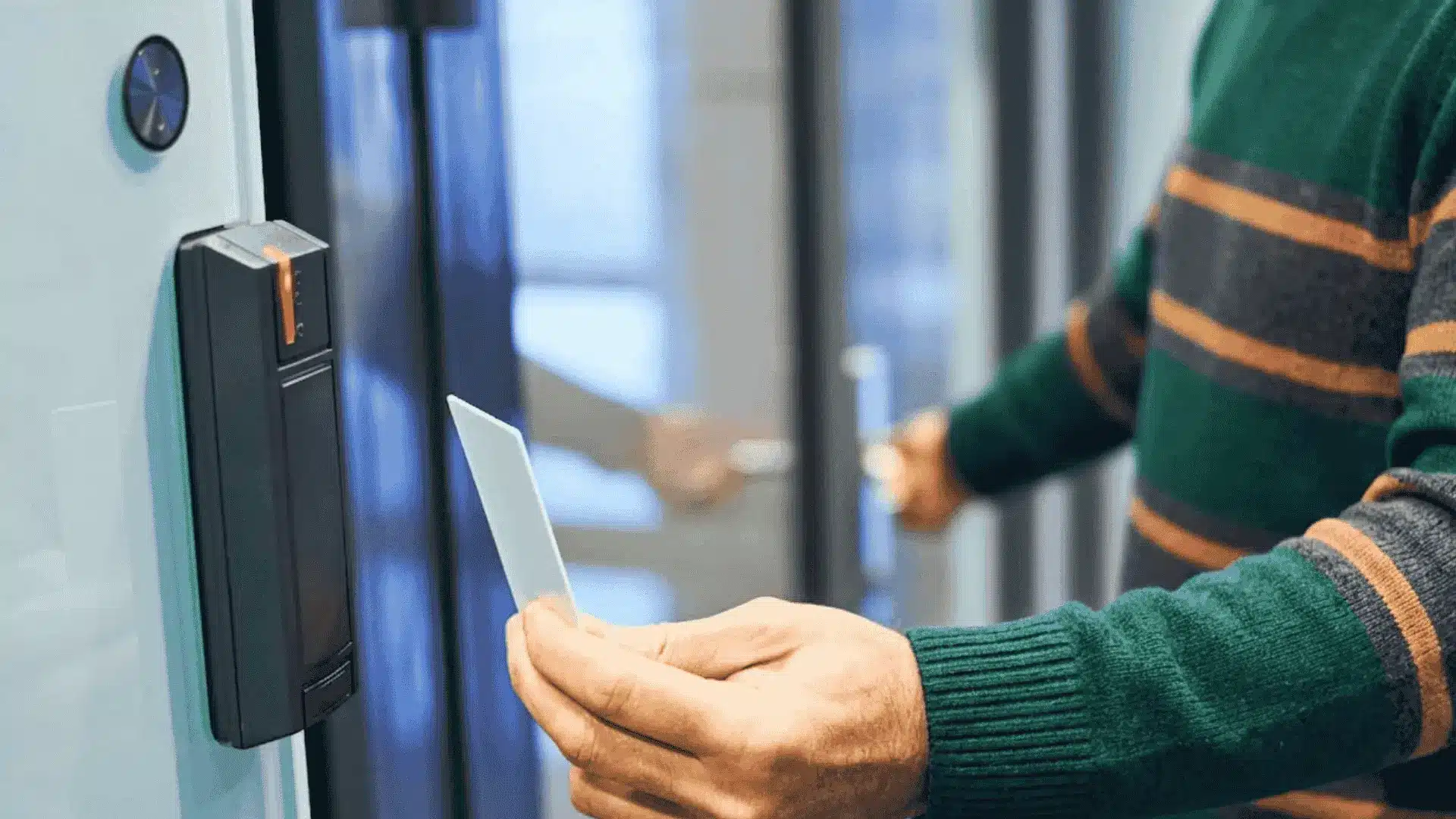
- Access Control Integration: Connect with keycards, push buttons, or security systems to manage entry permissions without slowing down daily operations inside.
- Adjustable Speed Settings: Allow customization of opening and closing speeds to suit user needs, traffic volume, and safety requirements standards.
- Energy-Saving Operation: Limit air exchange by opening only when needed, helping maintain indoor temperatures and reduce heating or cooling loss.
Top Commercial Automatic Doors Products
Reliable solutions designed to improve access, safety, and energy control across commercial spaces with different traffic and operational needs.
1. Pre-Hung Recessed Automatic Sliding Door by Terra Universal Home

Offers a ready-to-install automatic entrance solution suited for cleanrooms, labs, and controlled environments.
Built with a recessed frame and track that fit into an existing wall opening, it ensures a sleek finish while minimizing contamination risk.
The system is motion-activated for hands-free access, improving hygiene and workflow.
Durable construction includes stainless steel or powder-coated aluminum frames with tempered glass or static-dissipative panels, and a microprocessor motor with adjustable opening and closing speeds.
2. ST FLEX Green Sliding Door by Dormakaba

Focused on reducing energy loss, this solution supports sustainable building goals without sacrificing performance.
Smart sensor technology ensures the opening activates only when needed, minimizing air exchange in climate-controlled spaces.
Flexible configuration options allow adaptation to different entrance sizes and traffic patterns.
The system is suitable for locations where temperature control and energy savings are priorities, such as healthcare facilities and shopping centers.
3. Commercial Automatic Sliding Door by Automatic Door and Hardware

Delivers dependable, hands-free access tailored for busy entrances in retail, healthcare, and professional settings.
Designed with a robust DC motor and microprocessor control system, it ensures smooth and reliable operation every day.
Integrated safety sensors detect approaching pedestrians and prevent door closure on obstacles, supporting secure flow through high-traffic zones.
Multiple configurations include single or bi-parting setups to fit a variety of opening widths and architectural layouts.
4. A952 Automation for Swing Doors by FAAC Entrance Solutions

This automation system supports smooth operation for single and double-swing doors in commercial spaces.
Compact internal components allow installation without major structural changes. Intelligent control logic ensures doors respond accurately to user approach while maintaining safe movement.
The system supports adjustable force and speed settings to meet accessibility requirements. Integrated safety features help detect resistance and stop motion when needed.
It works well in locations with limited space where sliding doors are not suitable.
5. Skyline Pocket Indoor Automatic Sliding Door by eBay

Ready-to-install indoor sliding door kit that combines convenience with smooth operation for home or office interiors.
Designed with a recessed or pocket frame, the door slides neatly into the wall cavity, saving space and creating a clean, modern look.
Its simplified installation process lowers setup time and reduces maintenance compared with traditional motorized systems, thanks to efficient components that do not rely on heavy DC motors.
Built to meet quality standards (such as TS EN 160 compliance), it is suitable for interior doorways where quiet, reliable sliding action and space optimization are priorities.
Best Commercial Automatic Doors Manufacturers
Leading brands known for durable, high-performance commercial automatic doors catering to various industries with reliable safety features and advanced automation technologies.
- Dormakaba: Global provider of access solutions offering automatic door systems with smooth operation, advanced sensors, and strong integration with security and building management tools.
- FAAC Entrance Solutions: Manufacturer of versatile commercial automatic doors, including sliding and swing systems designed for heavy use, safety compliance, and customization across facilities.
- Horton Automatics: Known for robust automatic door systems with durable components, reliable performance, and energy-saving features that support busy entrances in commercial environments.
- NABCO (Nabtesco Corporation): Trusted automation brand delivering precision sliding doors with accurate detection, solid safety features, and consistent motion control for high-traffic applications.
- ASSA ABLOY: Major access technology firm producing automated sliding and curved door systems that combine architectural flexibility with dependable, everyday operation.
Cost Analysis of Commercial Automatic Doors
Commercial automatic sliding doors in the USA typically fall in the $3,000 to $8,000 installed range, covering the door system, sensors, operators, and labor.
Higher-end configurations with custom materials and compliance features can exceed this range, especially in specialized environments.
Basic systems are common in small retail spaces, while high-traffic locations such as hospitals require added safety features, low-energy operators, and durability upgrades.
Installation time depends on site conditions, and ongoing maintenance is necessary to keep systems operating smoothly.
Beyond upfront expense, automatic doors can reduce energy loss by maintaining better indoor sealing, contributing to long-term efficiency.
Market demand continues to grow around accessibility, reliability, and smart building integration rather than price alone.
Conclusion
Now you have a fair idea about how automatic door solutions fit into modern commercial spaces and why informed choices matter.
I’ve aimed to bring clarity to the topic so decisions feel easier, not overwhelming. From understanding product options to recognizing manufacturer roles, the bigger picture should now feel more connected.
Commercial automatic doors are no longer just background elements; they influence flow, safety, and daily operations in ways that add up over time.
This blog helps frame expectations and supports smarter planning for real-world environments.
If you’re weighing options, revisiting key points, or preparing for an upgrade, use this knowledge as a starting reference.
Want to share your experience, questions, or next steps? Drop a comment below and join the conversation with others today!